
Commercial Bean Harvester Machines
From 2-row kidney bean pullers to 5-row commercial diggers — precision-engineered dry bean harvesting equipment that cuts labor costs by up to 80% and pod shatter loss to under 4%.
Full Product Range
Bean Harvesters & Dry Bean Pullers
Choose the model that fits your farm scale — from small-hold kidney bean pulling to large-scale commercial operations covering 800+ acres per season.
-
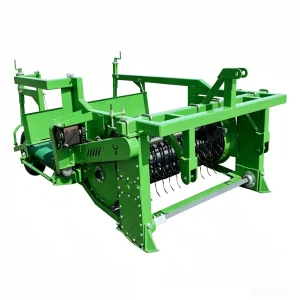
4BYH-1.3 Rear-Mounted 2-Row Kidney Bean Puller | Precision Bean Uprooting Machine
-
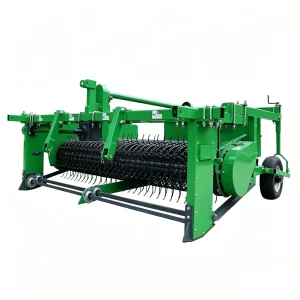
4BYH-2.6 Dry Bean Harvester – 4-Row Rear-Towed Mechanical Bean Digger
-
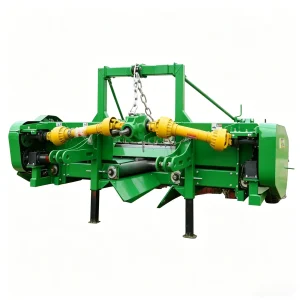
4BYQ-2.6 Dry Bean Puller – 4-Row Front-Mounted Mechanical Bean Digger
-
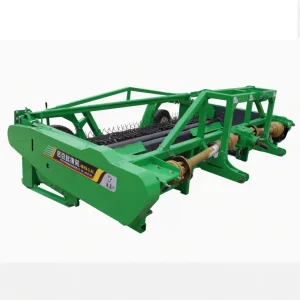
BYH-3.25 Kidney Bean Harvester | 5-Row Dry Bean Puller
-
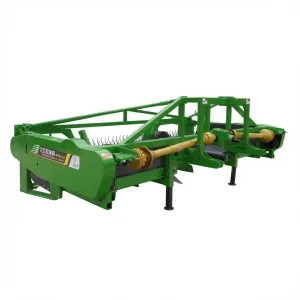
6-Row Kidney Bean Puller Machine for Sale | 4BYHD-3.9
Technical Overview
How Does a Bean Harvester Work?
Commercial dry bean harvesting uses a proven two-phase system. First, a tractor-mounted bean puller uproots plants and windrows them for field drying. Second, a combine or thresher completes separation and cleaning. Our machines handle Phase 1 with precision.
The core mechanism is a set of spring-tooth or blade assemblies that penetrate the soil at a controlled depth of 30–80 mm, gripping plants at the root crown and lifting them cleanly while a vibration stage removes clinging soil before the plant is laid in an even windrow.
Soil Penetration & Depth Setting
The operator sets the blade depth on the 3-point hitch to 30–80 mm depending on root system depth and soil moisture. The floating hitch follows field contours continuously.
Root Crown Lifting
Spring-tooth or blade assemblies grip the plant at root level, lifting the entire plant including pods. Polymer-tipped tines flex 8–12° under resistance to prevent pod damage.
Vibration Soil Removal
A PTO-driven vibration stage shakes the root ball, removing clinging soil before the plant is conveyed rearward. This protects bean grade and reduces thresher wear.
Uniform Windrowing
Plants are laid in an even, consistent windrow ideal for natural field drying and efficient pickup by any standard dry bean combine or stationary thresher.
Combine Pickup & Threshing (Phase 2)
After 3–5 days of field drying (depending on weather), a pickup combine harvests the windrows, threshes pods, and cleans grain to market-ready condition.
Phase 1A – Tractor Alignment
Row centers aligned to machine entry guides. Tractor operates at 6–10 km/h field speed on 540 PTO.
Phase 1B – Uprooting & Windrowing
Spring-tooth assembly lifts plants. Vibration removes soil. Plants conveyed into clean windrow at <4% pod shatter.
Field Drying – 3 to 5 Days
Windrows dry in field to target moisture level (14–16%). Timing is critical to maintain bean grade and seed coat integrity.
Phase 2 – Combine Pickup & Threshing
Standard dry bean combine picks up windrow, threshes pods, separates beans, and cleans grain to market-ready condition.
Why Mechanical Bean Harvesting Matters
The global dry bean market demands consistent quality, timely harvest, and cost-competitive operations. Mechanical harvesting is no longer optional for profitable bean production.
20–40
Worker-Hours Per Hectare — Manual Harvesting
Traditional hand-pulling of dry beans requires 20–40 labor hours per hectare. A single bean puller replaces 25–30 laborers while covering up to 3.25 ha/h.
5–8%
Typical Yield Loss Without Proper Equipment
Improper harvesting technique or delayed picking causes 5–8% yield loss from pod shattering and ground losses. Our pullers reduce this to under 4%.
36M+
Metric Tons of Dry Beans Produced Annually
Global dry bean production exceeds 36 million metric tons per year. North America is a leading producer of kidney, pinto, and navy beans for domestic and export markets.
Model Comparison & Crop Compatibility
All four models support the most common North American dry bean varieties. Select based on your acreage, tractor horsepower, and preferred mounting configuration.
| MODEL | ROWS | WIDTH | HP REQUIRED | CAPACITY (HA/H) | KIDNEY BEAN | PINTO BEAN | NAVY BEAN | BLACK BEAN | MOUNT |
|---|---|---|---|---|---|---|---|---|---|
| 4BYH-1.3 | 2 | 1.3 m | 25–50 | 0.5–0.8 | ✓ | ✓ | ✓ | ◐ | Rear |
| 4BYH-2.6 | 4 | 2.6 m | 90–120 | 1.56–2.6 | ✓ | ✓ | ✓ | ✓ | Rear-Tow |
| 4BYQ-2.6 | 4 | 2.6 m | 90–120 | 1.56–2.6 | ✓ | ✓ | ✓ | ✓ | Front |
| BYH-3.25 | 5 | 3.25 m | 140–180 | 1.95–3.25 | ✓ | ✓ | ✓ | ✓ | Rear |
Which Bean Harvester Is Right for You?
Match your operation scale to the right model. All machines use standard 540 PTO and fit tractors with 3-point linkage.
Small Farm (Under 150 Acres)
25–50 HP tractor. 2-row operation. Looking to replace hand labor on kidney bean or pinto bean plots.
View 4BYH-1.3 →Mid-Scale (150-400 Acres)
90–120 HP tractor. 4-row operation. Commercial dry bean production requiring fast, reliable windrowing with one operator.
View 4BYH-2.6 →Large Commercial (400-800+ Acres)
140–180 HP tractor. 5-row operation. Maximum field capacity with polymer-tipped tines for premium seed coat protection.
View BYH-3.25 →FAQ
Common Questions About Bean Harvesters
Answers to the questions B2B buyers ask most before placing an order.
How does a bean harvester work?
A bean harvester works in a proven two-phase system. In Phase 1, a tractor-mounted bean puller uses spring-tooth or blade assemblies to penetrate the soil at 30–80 mm depth, gripping each plant at the root crown and lifting it cleanly. A PTO-driven vibration stage then removes clinging soil before plants are laid in a uniform windrow across the field. After 3–5 days of natural field drying, Phase 2 begins: a standard dry bean combine or stationary thresher picks up the windrow, threshes the pods, and cleans the grain to market-ready moisture. Our 4BYH and BYH-series models handle Phase 1, achieving less than 4% pod shatter loss and covering up to 3.25 hectares per hour with a single operator.
What is the difference between a bean puller and a full bean harvester?
A bean puller (also called a bean digger or undercutter) performs the first phase only: it uproots the plant, removes soil, and lays it in a windrow for field drying. A full bean harvester or bean combine performs both phases in one pass — uprooting, threshing, separating, and cleaning — but typically causes higher pod shatter on very dry beans. The two-pass pull-and-windrow method used by our machines is the industry standard for premium-quality dry bean production because it allows the plant to dry slowly and evenly, preserving seed coat integrity and market grade.
What tractor horsepower do I need for a bean harvester?
Power requirements vary by model and row count. The 4BYH-1.3 (2-row) is designed for compact tractors of 25–50 HP. Both the 4BYH-2.6 and 4BYQ-2.6 (4-row) require 90–120 HP (66–88 kW). The large-scale BYH-3.25 (5-row) requires 140–180 HP (103–132 kW). All models use a standard 540 r/min PTO and fit Cat I, II, or III 3-point hitches. We recommend matching the model to your existing tractor to avoid purchasing additional equipment.
What bean crops can these harvesters handle?
All models are designed for the full range of dry pulse crops including kidney beans, pinto beans, navy beans, black beans, and similar field legumes with row spacings of 450–700 mm. The spring-tooth or blade picking assemblies are adjustable to handle different plant heights, root structures, and soil moisture conditions. Crops with very fine stems (like some specialty lentil varieties) may require individual depth adjustment — contact our team for specific crop compatibility.
What row spacing do these bean harvesters work with?
All models are compatible with row spacings from 450 mm to 700 mm — covering the most common North American planting configurations. The 4BYH-1.3 can handle spacings used in high-density kidney bean planting. The 4-row and 5-row models use adjustable guide assemblies to accommodate varying inter-row distances without frame modifications.
What is the optimal field speed for bean harvesting?
The recommended operating speed for all our bean harvesters is 6–10 km/h, with 5–6 km/h recommended when beans are very dry to minimize pod shatter from vibration. Under wet or high-clay conditions, reducing speed to 4–5 km/h improves root penetration and soil removal. The 4BYH-1.3 can operate at the lower end (4–7 km/h) due to its blade-based pulling mechanism. Consistent speed throughout the pass is more important than maximum speed — abrupt changes in pace increase pod losses significantly.
How do I get a price quote or place an order?
Contact our sales team directly at [email protected] or use the quote request form on any product page or the contact form on this page. Please include your farm location, desired model, tractor HP/brand, bean crop type, and annual acreage so we can provide accurate pricing, shipping logistics, and any optional configuration recommendations. Canada hay-balers Co. Ltd offers factory-direct pricing with no dealer markup.