
Hay & Forage Production Applications
High-density round baling and precision windrow raking for commercial hay farms, livestock operations, and forage contractors — engineered to cut dry matter losses and maximise bales per hour.
The Real Cost of the Wrong Equipment
The Real Cost of the Wrong Equipment
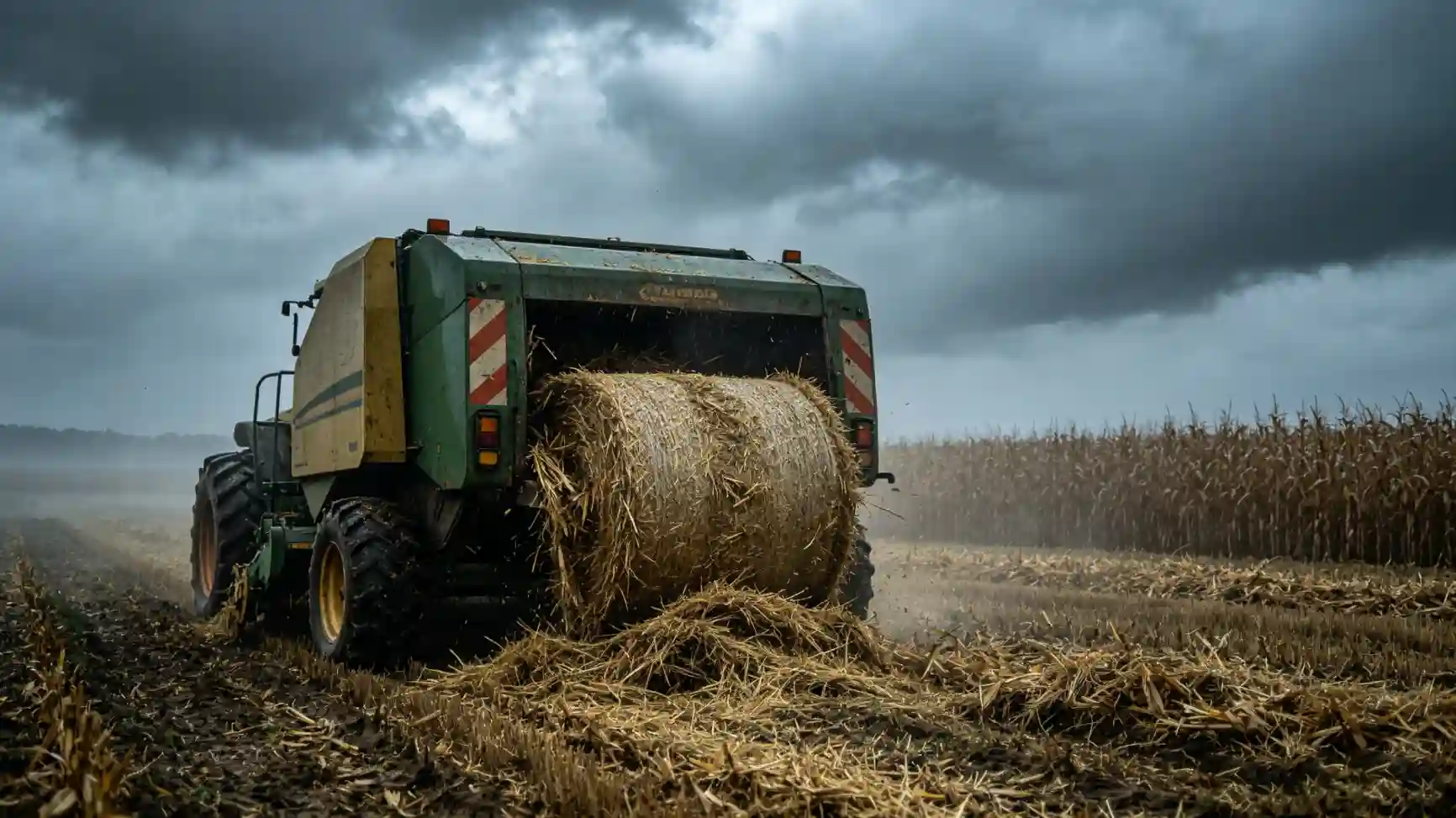
"Rain forecast in 36 hrs. The baler jammed twice. Half the field is still on the ground."
Race the Storm —
and Win
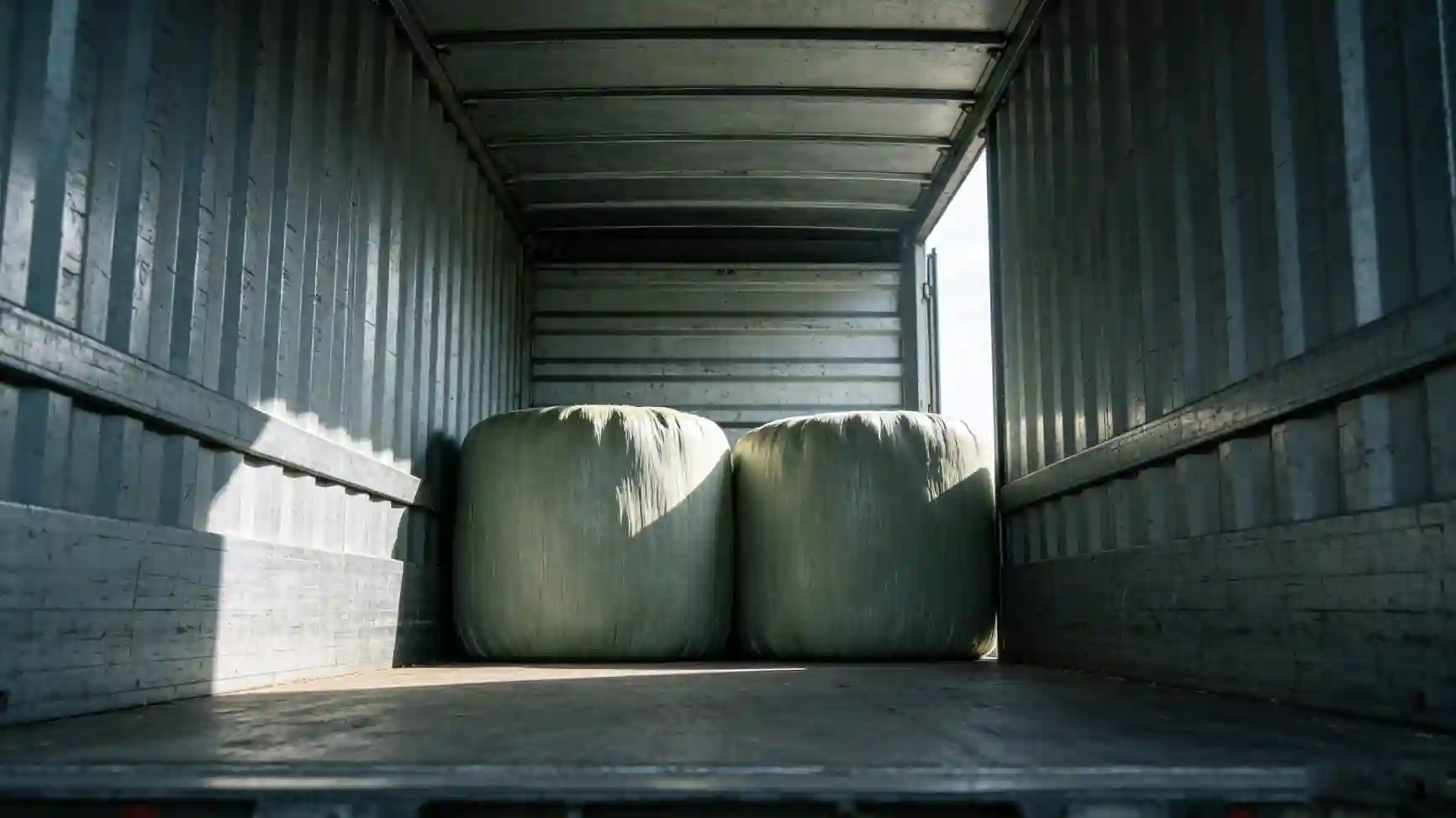
"Full by volume, half-empty by weight. We're paying to ship air across three states."
Pack More Tonnes
Per Truck
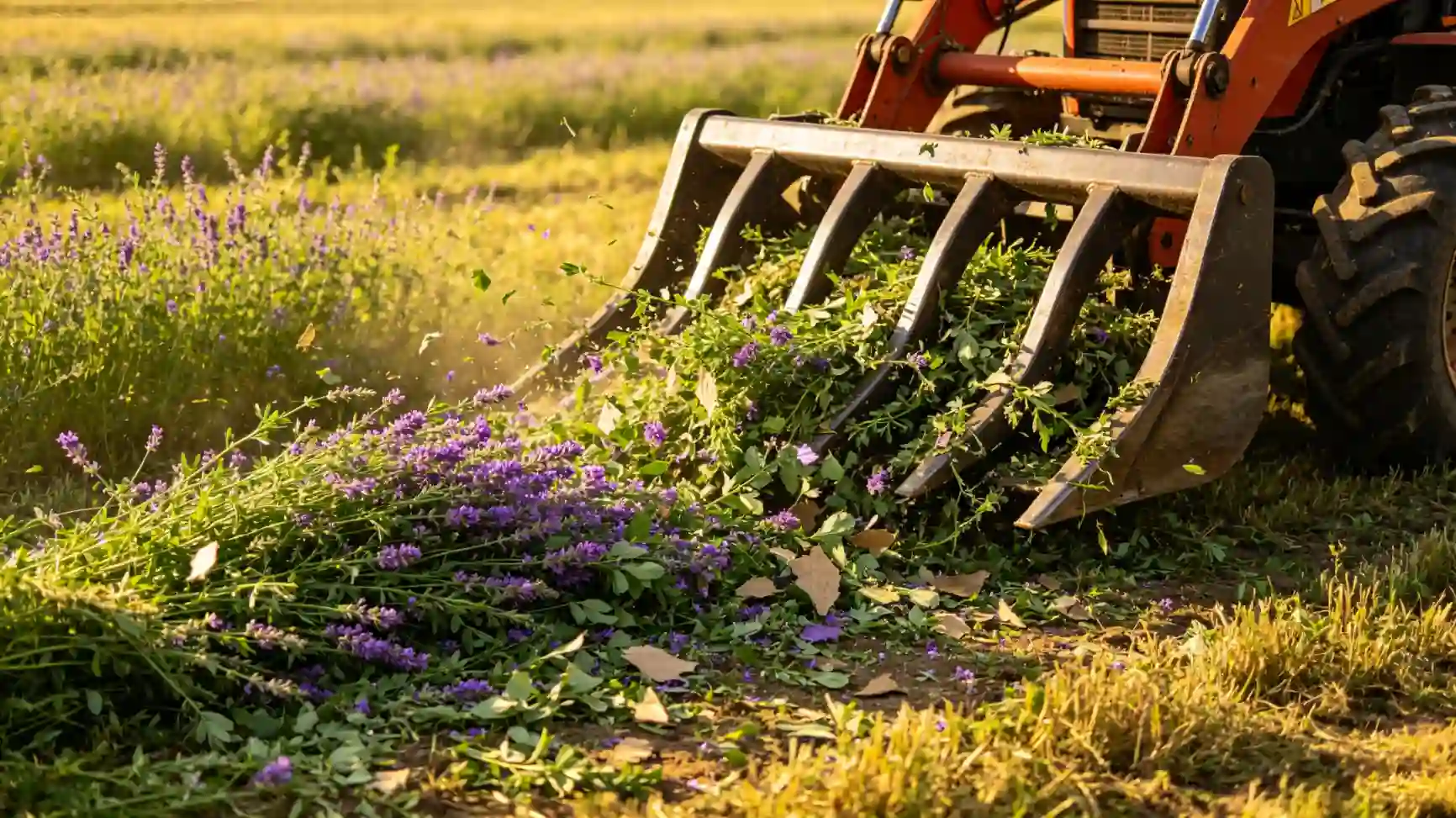
"We grew Premium alfalfa all season. The tines were too stiff — leaves shattered and stayed on the ground."
Keep the Leaves
in the Bale
The Forage Production Workflow
From Standing Crop to Stored Bale —
The Five-Stage Chain Our Equipment Covers
Complete Hay & Forage Equipment Line-Up
Eight baler models and six rake configurations — every specification mapped to a specific operation scale, crop type, and tractor horsepower. Factory-direct pricing, container shipping worldwide.
| MODEL | CATEGORY | SCALE | KEY CROPS | CORE SPEC | PTO | BEST FOR | DETAILS |
|---|---|---|---|---|---|---|---|
| 9YG-2.24D S9000 Beyond | Round Baler | Commercial | Hay, Silage, Straw | 40–100 bales/h · 500 kg | 75–135 HP | Export / Contractors | View → |
| 9YG-2.24D S9000 Classic | Round Baler | Commercial | Hay, Forage, Straw | 40–100 bales/h · 370 kg | 75–135 HP | Multi-field operations | View → |
| 9YG-2.24D High-Density | Round Baler | Commercial | Hay, Straw, Silage | Up to 500 kg/bale | 70–100 HP | High-density priority | View → |
| 9YG-1.25A | Round Baler | Mid-Scale | Alfalfa, Corn, Multi-crop | 1.25 m diameter · Net wrap | 55–75 HP | Mixed-crop livestock | View → |
| 9YG-1.0 | Round Baler | Small Farm | Hay, Straw, Biomass | 1.0 m diameter · Twine/Net | 40–55 HP | Farms < 500 acres | View → |
| MODEL | CATEGORY | SCALE | KEY CROPS | CORE SPEC | PTO | BEST FOR | DETAILS |
|---|---|---|---|---|---|---|---|
| 9LZD-9.0 | Hay Rake | Commercial | Grass, Alfalfa, Straw | 9.0 m width · ≤2% loss | 75–102 HP | High-volume contracts | View → |
| 9LZY-9.0 | Hay Rake | Commercial | Grass, Alfalfa, Straw | 15-wheel · 9.0 m | No PTO / 68–75 HP | Large grassland | View → |
| 9LH-12 | Hay Rake | Commercial | Grass, Alfalfa, Clover | 12 m width · 168 tines | No PTO / 35–60 HP | Large natural grass | View → |
| 9GL-5.0/5.6 | Mower-Rake | Large-Scale | Alfalfa, Grass, Sudan | 5.0 m cut · 2.4–2.8 ha/h | 40–80 HP | Eliminate 2nd pass | View → |
| 9LZ-6.0 | Hay Rake | Mid-Large | Grass, Alfalfa, Straw | 6.0 m width · 12 wheels | ≥35 HP | Cost-effective step | View → |
| 9GL-2.5/2.9 | Mower-Rake | Small-Mid | Grass, Alfalfa, Clover | 2.5 m cut · 920 kg | 35–75 HP | Compact farms | View → |
Real Operations. Measured Outcomes.
The following case examples reflect the operational contexts in which our hay balers and rakes are deployed by commercial forage producers and livestock farms worldwide.
Large-Scale Forage Contractor Switches to 9YG-2.24D S9000 Beyond
A commercial forage contractor operating across multiple farms in the US Midwest was struggling with inconsistent bale density.
Alfalfa Operation Reduces Raking Passes with 9LZD-9.0
A British Columbia dairy operation was running two passes per field with a 4.5 m rake. Switching to the 9LZD-9.0 cut raking time by more than half.
Multi-Crop Livestock Farm Standardises on 9YG-1.25A
An Australian beef operation needed a single machine to handle three crop types without reconfiguration delays.
What B2B Buyers Ask Before They Order
What baler is best for a commercial hay farm producing 500+ bales per day?
For operations at 500+ bales/day, the 9YG-2.24D S9000 Beyond or S9000 Classic is the recommended choice. Both deliver 40–100 bales/h with sensor-driven automatic density control and net-wrap binding as standard. Paired with an 80+ HP tractor on a prepared windrow, sustained daily output above 500 bales is achievable in normal field conditions.
Can your balers handle silage and high-moisture crops?
Yes. The 9YG-1.25A and 9YG-2.24D series are rated for silage and high-moisture forage. Net-wrap binding is critical for silage bales to maintain anaerobic fermentation — all 2.24D models include net wrap as standard. For silage, baling at 40–65% moisture and wrapping within 2 hours of baling is recommended practice.
Do you supply spare parts for markets outside North America?
Yes. Tines, bearings, net-wrap components, and drive parts are stocked independently of complete unit orders. Buyers in Africa, Central Asia, and Southeast Asia regularly source replacement components without waiting for full machine shipping lead times. Spare-parts lists are included with every order.
What working width do I need to keep pace with a 100-bale/hour baler?
A 2.24 m pickup baler operating at 100 bales/h covers roughly 5–8 ha/h depending on windrow density. To keep the baler fed without gaps, you need a rake capable of raking at least 6–9 ha/h. Our 9LZD-9.0 (9.0 m) or 9LZY-9.0 (15-wheel) rakes are designed to match this throughput.
What does "factory-direct" mean for our procurement process?
Factory-direct means you source from Canada Hay-Balers Co., Ltd directly — no trading company or third-party distributor in between. This results in shorter lead times (30–45 days for most markets), lower unit pricing, and direct access to our engineering team for specification queries before and after order placement.
What certifications do your hay balers carry?
All equipment is manufactured under ISO 9001:2015 quality management standards. Our company holds CE marking, Two-System Integration Grade-A, and AAA Credit Enterprise certification. Every machine is validated through independent in-house quality testing and shipped with full documentation for customs and compliance purposes.