الوصف
9YF-2200/1900/1700 Square Hay Baler — Towed High-Density Straw and Forage Baling Machine
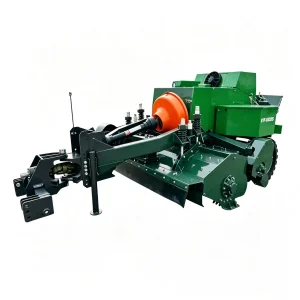
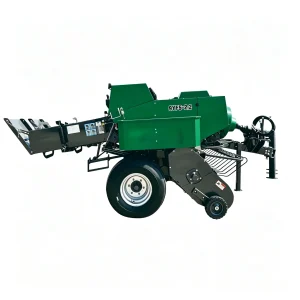
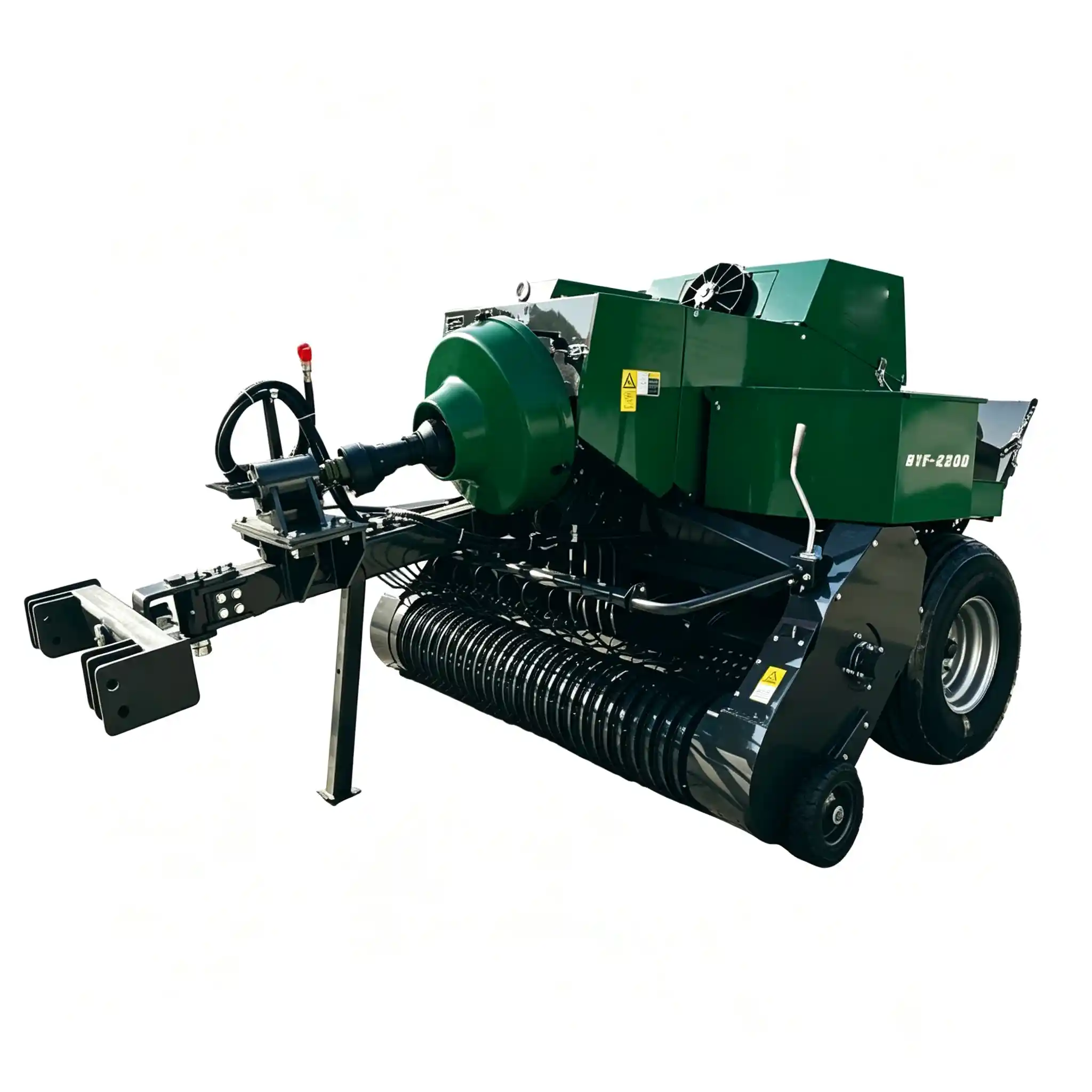
The 9YF Series is a mid-mounted trailed square hay baler engineered for high-volume collection and baling of wheat straw, rice straw, cotton straw, corn straw, and a wide variety of cultivated forage grass. Three pickup-width configurations — 2,200 mm, 1,900 mm, and 1,700 mm — let operators match the machine to their tractor class, field layout, and daily tonnage target. Each model in this hay baling machine range uses a spring-tooth pickup, D-type knotters, and automatic rope baling to keep one operator running the full process without manual intervention. Bales exit at a 460 × 360 mm cross-section: uniform, dense, and suitable for stacking, container shipping, and downstream animal feed processing.
Features of the 9YF Series Square Hay Baler
Each feature below is tied to a specific operational outcome — faster throughput, lower leaf loss, or wider tractor compatibility — so buyers can evaluate fit before requesting a quote.
- Three pickup-width options: 1,700 / 1,900 / 2,200 mm — Operators choose the width that matches their windrow width and tractor power class. The 2,200 mm model covers the widest combine swaths in a single pass; the 1,700 mm model is compact enough for narrower paddy-field headlands and lighter tractors from 29.5 kW upward.
- Spring-tooth pickup roller — Four rows of spring steel teeth rotate continuously over the windrow, lifting material cleanly from the ground surface without disrupting the swath. Material loss during pickup is measurably lower compared with rigid-finger systems, particularly on light, short-stemmed straw such as rice residue.
- Fork feeding mechanism — A positive-displacement fork feeder delivers crop material into the compression chamber in metered charges, forming one consistent flake per stroke. Controlled flake loading is the primary mechanism that prevents chamber bridging and keeps bale density stable across changing windrow volumes.
- D-type knotters (2 per machine) — The D-type knotter geometry produces a mechanically secure knot in both natural fibre and synthetic rope twine. At the 460 × 360 mm bale cross-section, two knotters are sufficient to tie every bale reliably across the full range of crop densities handled by this small square baler series.
- Automatic rope baling — Twine tensioning, needle throw, and knot tying all occur automatically when the bale reaches the set length. The operator does not leave the tractor cab, eliminating the manual-tie step that slows older equipment and increases operator fatigue during long baling shifts.
- Towed-type hitching — Tongue-hitch coupling attaches to a standard drawbar in under five minutes. The trailed configuration keeps the machine weight off the three-point linkage, improving front-axle weight distribution on slopes and rough paddock ground.
- Paddy and dry-field rated — The chassis ground clearance and baling needle geometry are calibrated to work in both irrigated paddy fields and dry arable land without adjustment, which is significant for operations that handle multiple crop types across a season.
- High-density 460 × 360 mm bale output — Uniform rectangular bales with well-defined edges and corners stack more efficiently in barns, containers, and transport vehicles than round bales of similar mass, reducing dead air space and lowering per-tonne storage and freight cost.
Technical Specifications of the 9YF-2200 / 1900 / 1700 Models
All values below are factory-rated figures. Contact us for regional certification documentation or tolerance data for export customs purposes.
| Parameter | Unit | 9YF-2200 | 9YF-1900 | 9YF-1700 |
|---|---|---|---|---|
| Hitching Method | — | Towed-type | Towed-type | Towed-type |
| Pickup Width | mm | 2,200 | 1,900 | 1,700 |
| Pickup Structure | — | Spring Tooth Type | Spring Tooth Type | Spring Tooth Type |
| Feeder Structure | — | Fork Feeding Mechanism | Fork Feeding Mechanism | Fork Feeding Mechanism |
| Knotter Type | — | D-Type | D-Type | D-Type |
| Number of Knotters | pc | 2 | 2 | 2 |
| Compression Chamber (W x H) | mm | 460 x 360 | 460 x 360 | 460 x 360 |
| Baling Method | — | Automatic Rope Baling | Automatic Rope Baling | Automatic Rope Baling |
| Matching Power Range | kW | ≥36.8 | 36.8 – 73.5 | 29.5 – 73.5 |
| Overall Dimensions (L x W x H) | mm | 5700 x 2800 x 1780 | 4965 x 2640 x 1750 | 4965 x 2500 x 1750 |
| Machine Weight | kg | 1,950 | 1,850 | 1,750 |
Note: The 9YF-1700 is compatible with the widest tractor power range (29.5 – 73.5 kW), making it the most flexible model for operations running mixed tractor fleets. The 9YF-2200 requires a minimum of 36.8 kW and suits high-capacity operations targeting the fastest per-day bale count.
How the Square Hay Baler Works
The 9YF Series follows a four-stage mechanical cycle that runs continuously as the tractor moves forward. Understanding each stage helps operators set travel speed, twine tension, and chamber pressure for consistent output in varying crop conditions.
Stage 1 — Pickup: As the baler advances, the spring-tooth roller at the front lifts cut material from the windrow and directs it rearward into the feeder inlet. The spring teeth flex to follow ground contours, recovering short-stemmed residue that rigid-finger pickups would miss, and releasing the material cleanly once it clears the feed channel.
Stage 2 — Fork Feeding: The fork feeding mechanism moves crop from the inlet into the compression chamber in discrete, metered charges. Each charge forms one flake of the finished bale. Metered feeding is critical for density consistency: too large a charge starves the plunger; too small a charge produces a soft, under-density bale that loses shape during storage.
Stage 3 — Plunger Compression: A reciprocating plunger driven by the tractor PTO compresses each incoming flake against the growing bale stack inside the 460 x 360 mm chamber. Adjustable chamber tension controls how much resistance the plunger works against, directly setting final bale density and weight. Higher tension produces denser bales suited to long-haul export; lower tension is appropriate for on-farm livestock feed where ease of breaking the bale is a priority.
Stage 4 — Automatic Tying and Ejection: When the bale length sensor triggers, the needle arm swings upward through the bale slot, carrying twine to both D-type knotters simultaneously. Each knotter ties a secure knot, severs the twine, and retains the free end to start the next bale. The finished bale is pushed rearward by the next forming bale and drops to the field for later collection. The tractor never stops during this sequence, and the operator takes no manual action.
Pairing this square hay baler with a matched trailed mower conditioner in the preceding operation reduces material dry-down time by 20–30% and produces a narrower, denser windrow that feeds the pickup more evenly, improving bale density consistency across a full field day.
Advantages of the Spring Tooth Pickup System
The spring-tooth pickup is the component that most directly determines field efficiency and material recovery rate in any square hay baler for hay and forage. Here is how the 9YF Series design addresses the four most common pickup-related problems buyers encounter with competing machines.
Lower Material Loss on Short Straw
Spring teeth flex independently as they pass over the ground, following micro-terrain changes that a rigid-finger reel cannot track. On short-stemmed rice and wheat straw — where loss rates on fixed-finger pickups can exceed 8% — the spring-tooth design recovers material that would otherwise remain on the ground.
No Windrow Disruption
The spring teeth lift material upward and rearward without disturbing the lateral swath position. This is particularly important in paddies and narrow row crops where windrows must stay precisely positioned for the following baling pass. Disrupted windrows result in double-pass pickups that slow daily output significantly.
Reduced Risk of Tooth Breakage in Rocky Ground
Spring steel teeth deflect on contact with embedded stones and hard clods rather than transmitting the impact load directly to the reel shaft. Tooth deflection keeps the pickup running after a ground strike that would bend or snap a rigid tine and require a field stop for replacement.
Consistent Feed to the Chamber Across Windrow Density
When windrow density varies — thin patches between thicker patches — the spring teeth maintain consistent reel speed and material delivery to the fork feeder. Irregular feed volume is the primary cause of density variation between bales; the spring-tooth reel reduces this variation and produces a more uniform output across the full field.
Frequently Asked Questions About Square Hay Balers
Get a Quote for the 9YF Series Square Hay Baler
Send us your tractor PTO rating (kW or hp), primary crop type, and target daily bale count and we will recommend the right model — 9YF-1700, 9YF-1900, or 9YF-2200 — with a full specification sheet and lead-time confirmation. Response within 24 hours on business days.
To build a complete mechanised hay harvest chain, pair your square hay baler with any of these complementary machines from our product range:
- Round Hay Balers — Large-diameter round bales for silage, dry pasture, and long-haul forage transport; suited to high-throughput operations on level arable ground.
- Trailed Mower Conditioners — Cut and condition standing crop in a single pass; reduces dry-down time by 20–30% and produces a consistent windrow for downstream square baling.
- PTO Drive Shafts — Heavy-duty agricultural drive shafts rated for peak baler load demand, protecting the knotter gearbox and tractor PTO from shock loading during dense-windrow passes.