Açıklama
Trailed Round Baler · 75 kW Class
Product Overview
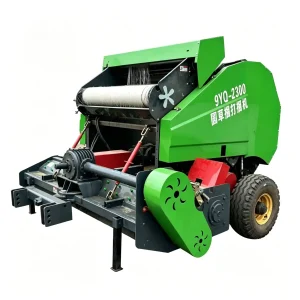
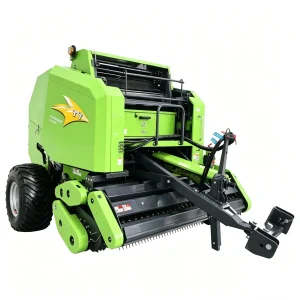
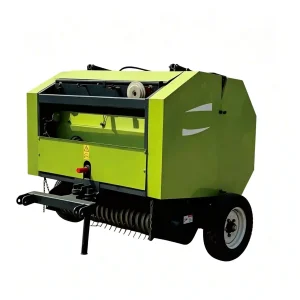
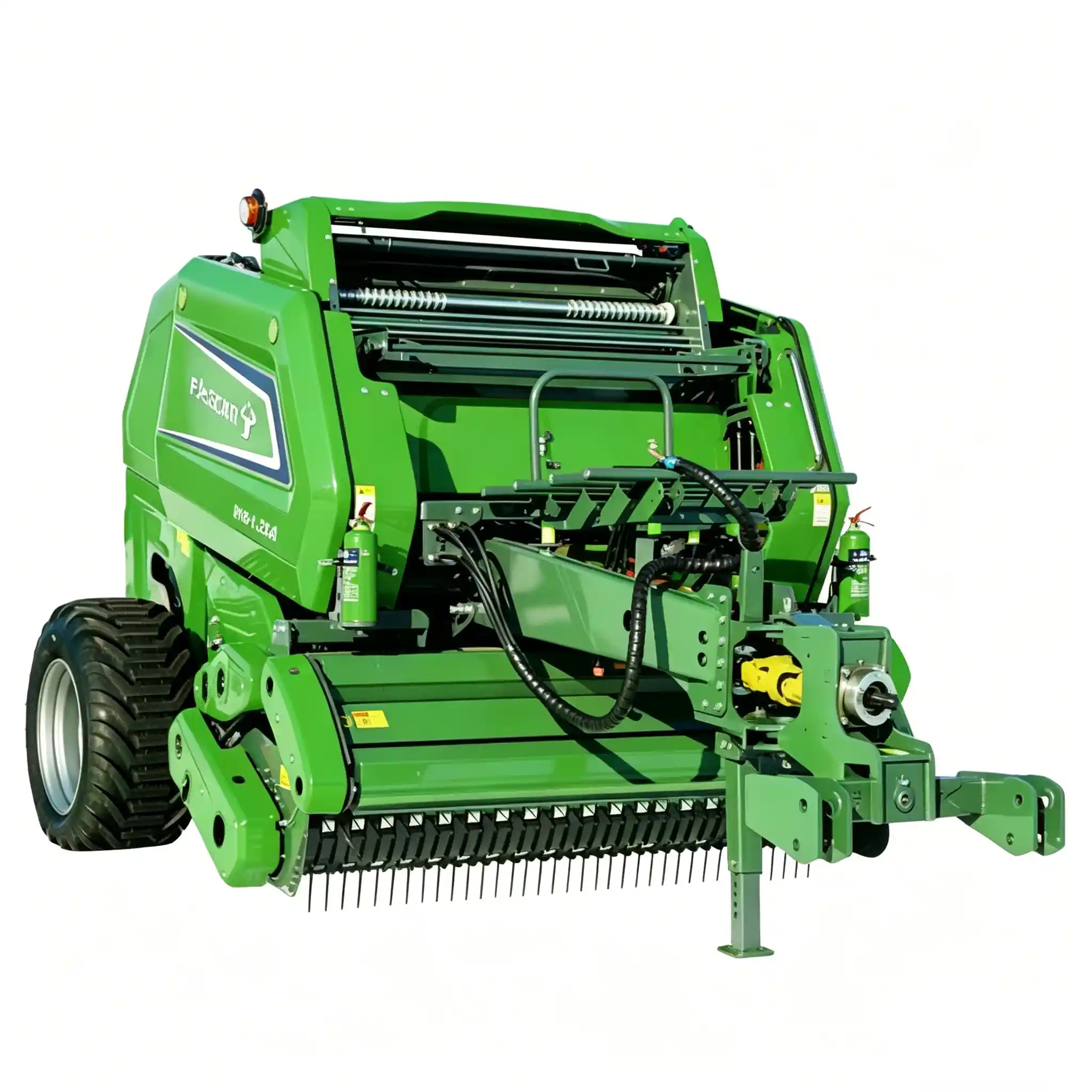
The 9YG-1.25A Cylindrical Baler is a 4,472 kg trailed round baler built for mid-power tractors that don’t have 120 HP to spare. With a 2,150 mm spring-tooth pickup, an 18-roller fixed-chamber compression system, and sensor-controlled density regulation, it produces bales of 1,300 mm diameter × 1,250 mm width at densities between 100 and 200 kg/m³.
What sets the 9YG-1.25A apart from heavier industrial cylindrical balers in its category is the working speed range of 5–35 km/h — nearly double the field pace of conventional 120 HP-class units. Combined with 40–100 bales/hour throughput and a wide PTO input range of 540–1,000 r/min, it pairs cleanly with a wide variety of tractors from John Deere, Case IH, Massey Ferguson, Kubota, and Mahindra at the 75 kW (≈100 HP) tier and up.
Engineered for B2B forage operations — contract balers, dairy farms, lucerne growers, and biomass suppliers — this industrial cylindrical baler with 2150 mm pickup width is designed to bale alfalfa, oat hay, wheat straw, rice straw, and silage with consistent results across the full season.
Technical Specifications of Cylindrical Baler
Factory-verified specifications for the 9YG-1.25A trailed round baler.
Product Gallery
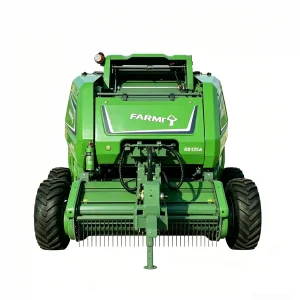
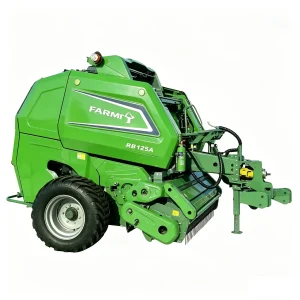
Field Applications
The 9YG-1.25A trailed round baler is built for operations that need throughput without burning premium fuel on a 130 HP tractor. Below are the crop and operation profiles where this machine performs at its best:
- Alfalfa & Lucerne Hay: Spring-tooth pickup runs over windrowed lucerne with low leaf shatter. Sensor-controlled density holds bale weights consistent across moisture variation — protein-grade hay markets reward this consistency.
- Cereal Straw (Wheat, Oat, Barley): The 2,150 mm pickup matches the standard windrow width left by mid-frame hay rakes. Operators report 80–95 bales/hour on straight straw runs.
- Silage & Haylage: Density set to 100–115 kg/m³ keeps bale shape soft enough for the wrapper’s stretch-film to seal properly — pair with a bale wrapper for fermentation-grade output.
- Rice Straw & Paddy Recovery: Lighter weight (4,472 kg) plus 5–35 km/h working speed make it suitable for soft-soil paddy work where heavier balers leave ruts.
- Contract Baling Services: The 75 kW power requirement opens the addressable market — most contractors already own a tractor in this class. Lower fuel cost per bale than 120 HP-class units.
- Biomass & Bedding Suppliers: 200 kg/m³ density at the upper end of the range produces transport-dense bales. Stack 3 high on standard 40-foot containers for export.
Product Usage Guide
Follow these five steps to operate the 9YG-1.25A safely and at full capacity. Most experienced operators reach the upper productivity range (90+ bales/hour) within their second working day.
Pre-Operation Inspection & Hitching
Walk around the machine. Check pickup tines for bends, rollers for chaff buildup, and tires for proper inflation. Reverse the tractor to the drawbar, drop the hitch pin, and secure the safety chain. Connect both hydraulic hoses (rear gate + density adjust) to clean tractor outlets.
PTO Connection & Calibration
Slide the PTO shaft onto the tractor’s spline; ensure the locking collar clicks. Set tractor PTO to match the 540–1,000 r/min input range. Run the tractor at idle and engage the PTO — listen for any abnormal vibration before increasing throttle to working RPM.
Pickup Adjustment & Field Setup
Lower the pickup so spring tines clear the ground by 25–40 mm. Set target bale density on the sensor controller — 100 kg/m³ for silage, 150 kg/m³ for hay, 180–200 kg/m³ for straw and biomass. Load a fresh net-wrap roll (2,000 m × 1.25 m) and feed through the auto-tie guide.
Baling Operation & Bale Ejection
Drive 5–15 km/h through windrows, faster on light cereal straw, slower on dense lucerne. Watch the chamber pressure indicator — when full, stop forward travel, let the net-wrap cycle complete, then activate the rear-gate hydraulic to eject. Keep the PTO engaged during ejection unless the operator manual specifies otherwise.
Shutdown & End-of-Day Routine
Disengage PTO, idle the tractor for 30 seconds, then shut off. Lower the pickup to its rest position. Open the chamber and clear residual material from rollers. Grease all daily-service zerks. Park on level ground with the drawbar resting on a wood block to relieve hitch cylinder pressure.
Why Choose Our 9YG-1.25A
75 kW
Lower power threshold than the 9YG-1.25 (88.2 kW). Pairs with the tractors most contractors already own — no need to upgrade the prime mover.
100/h
Top-end productivity of 100 bales/hour — the higher 5–35 km/h working speed band lets light crops be baled at near-transport pace without losing density.
φ 1,300
Larger bale diameter than the 1.25 model means more material per bale at the same trip count — fewer wrap cycles, more tons per hour to the storage yard.
Sensor
Real-time pressure sensors hold bale density to the 100–200 kg/m³ target. No guesswork on the rear gate — every bale leaves the chamber matched to the operator’s setting.
CE/ISO
CE marking and ISO 9001 quality records ship with every unit. Export documentation, fumigation, and certificate-of-origin are handled by our trade team.
12 mo
12-month structural warranty on driveline, gearbox, and welds. Wholesale net-wrap and spare-parts re-supply available with a single inquiry.
Frequently Asked Questions
Q1. What is the difference between a cylindrical baler vs square baler?
Cylindrical balers form round bales that shed water and resist outdoor spoilage. Square balers form rectangular bales that stack tighter for transport. The 9YG-1.25A round design suits livestock feed and silage operations.
Q2. What tractor and PTO speed are required?
Minimum 75 kW (≈ 100 HP). PTO input runs in the 540–1,000 r/min range, which covers most modern tractors with selectable PTO speeds. For wet silage in heavy windrows, a 90 kW tractor is recommended for steady throughput.
Q3. How heavy is each finished bale?
A φ 1,300 × 1,250 mm bale at 100 kg/m³ density weighs around 166 kg (silage). At 200 kg/m³ it reaches 332 kg (dry hay or straw). Density is set on the sensor controller before each run — no manual gate adjustment needed.
Q4. Is wholesale net-wrap supply available?
Yes — we stock UV-stabilized net-wrap rolls in the 2,000 m × 1.25 m format and offer wholesale net-wrap cylindrical balers packages with a 12-month consumables supply included. Ask for the bundled-quote option.
Customer Feedback
We run a 95 HP New Holland on the 9YG-1.25A and it handles our oat-hay windrows at full pace. Field productivity hit 92 bales/hour on the second day. Density readings on the silage runs come in spot-on at 110 kg/m³.
— Liam O., Forage Contractor, Tipperary 🇮🇪
Salesman swore this thing would do 100 bales an hour. I laughed. Three weeks later I’m apologizing to my neighbor for laughing — he watched me hit 102 last Tuesday and now he’s pricing one of his own. My old baler is officially in the witness protection program.
— Earl D., Hay Operation, Oklahoma 🇺🇸
Bought it for our paddy-straw recovery operation. The lighter chassis leaves much shallower wheel tracks compared to the 120 HP unit we tested. The wholesale net-wrap supply deal was the icing on top — everything in one purchase order.
— Surya N., Rice Co-op, Andhra Pradesh 🇮🇳
Companion Equipment
A trailed round baler is one piece of a complete forage system. Pair the 9YG-1.25A with the equipment below to keep the field-to-barn workflow bottleneck-free:
Tractor (75–110 kW)
The 9YG-1.25A’s lower power threshold lets it pair with mid-frame tractors (John Deere 6M, Case IH JX/Maxxum, Massey Ferguson 4700/5700, Kubota M-series). Verify PTO speed selectability includes the 540–1,000 r/min range.
PTO Shaft (1,000 Nm class)
A heavy-duty PTO shaft with telescoping length matched to your tractor’s drawbar distance and a slip-clutch overload protector. Cheap shafts shear regularly during dense windrow pickup — a false economy.
Disc or Drum Mower
First step of the hay chain — cuts standing forage. Match mower working width (typically 2.0–2.4 m) so the resulting swath suits the 2,150 mm pickup. Disc mowers handle dense lucerne better; drum mowers suit lighter grasses.
Hay Tedder
Spreads cut hay across the field for even drying. A 30–40% reduction in dry-down time means the operator hits target moisture (15–18% for hay, 50%+ for silage) on schedule. Skip this and bottom-layer mold becomes a problem.
Hay Rake
Forms uniform windrows sized to the 2,150 mm pickup. Twin-rotor rakes produce the cleanest windrows; single-rotor models work for smaller fields. Match rake working width to baler pickup — over-wide windrows force the operator to slow down.
Bale Wrapper
For silage operations, wrap bales within 2–4 hours of baling. The φ 1,300 × 1,250 mm bale fits standard round-bale wrappers. Stretch-film count of 4–6 layers is typical for fermentation-grade silage.