
Square Hay Balers
Built for the Field.
Three towed-type square hay baler models — 1,700 mm to 2,200 mm pickup width — covering tractors from 29.5 kW to 100+ hp. Automatic rope baling, D-type knotters, 460 x 360 mm uniform bale output. Wheat straw, rice straw, corn stalks, alfalfa, and mixed forage.
What Makes a Square Hay Baler the Right Choice for Your Operation?
Square hay balers produce rectangular bales with defined edges and uniform dimensions — a geometry that directly reduces storage space waste, simplifies mechanical bale handling, and meets the dimensional specifications required by most export hay buyers in North America, East Asia, the Middle East, and Southeast Asia.
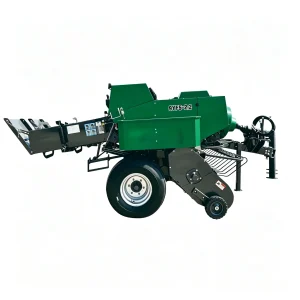
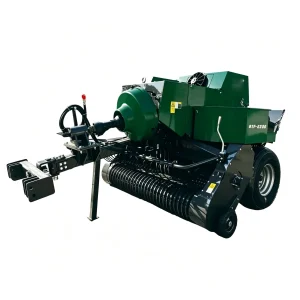
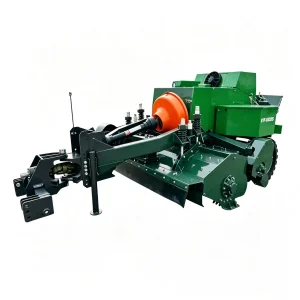
Our 9YF Series square hay balers are towed-type machines that connect to a standard drawbar hitch. One tractor operator runs the full pickup-to-bale cycle. Automatic rope baling with D-type knotters ties and severs twine without any manual step, so field speed — not operator pace — limits daily throughput.
The series covers three pickup widths (1,700 / 1,900 / 2,200 mm) and two pickup technologies (spring-tooth and hammer-claw), letting buyers match both tractor power class and crop type rather than buying more machine than their operation needs.
All models produce bales at a 460 x 360 mm cross-section. Adjustable bale length gives operators control over finished bale weight to match transport vehicle limits or buyer specifications without changing equipment.
Why Choose a Square Baler Over a Round Baler?
The Square Hay Baler Cycle — Four Stages, One Operator
All 9YF Series models follow the same four-stage PTO-driven cycle. The tractor never stops.
Pickup
The reel (spring-tooth or hammer-claw) lifts cut material from the windrow and directs it rearward into the feeder inlet as the machine moves forward.
Fork Feeding
The fork feeder delivers material into the compression chamber in metered charges, forming one flake per stroke. Controlled loading keeps bale density uniform across variable windrow thickness.
Compression
A reciprocating plunger driven by the PTO compresses each incoming flake against the growing bale stack. Adjustable chamber tension sets final density and bale weight.
Auto-Tie and Eject
When the length sensor triggers, the D-type knotter ties and severs the twine automatically. The finished bale is pushed out by the next forming bale. No operator action required.
Which Crops Can Our Square Hay Balers Handle?
Moisture and terrain conditions are the primary factors. Match your crop to the correct model below.
| Crop | Moisture Range | 9YFS-2.2 | 9YF-2200/1900/1700 | 9YF-2200S |
|---|---|---|---|---|
| Wheat Straw | 10 – 23% | Yes | Yes | Yes |
| Rice Straw | 10 – 23% | Yes | Yes | Yes |
| Alfalfa and Legume Forage | 17 – 23% | Yes | Yes | Yes |
| Corn Straw (cut and laid) | 10 – 23% | Yes | Yes | Yes |
| Corn Straw (upright or lodged) | 10 – 23% | No | No | Yes |
| Sorghum Stalks | 10 – 23% | Limited | Limited | Yes |
| Cotton Stalks | 10 – 20% | Limited | Limited | Yes |
Frequently Asked Questions About Square Hay Balers
What tractor horsepower do I need for a square hay baler?
Small square balers typically require 25–50 PTO hp. Our 9YF-1700 starts at 29.5 kW (40 hp); the 9YFS-2.2 twin-chamber runs on 25–51.5 kW (34–69 hp). The 9YF-2200S with hammer-claw shredding needs at least 73.5 kW (100 hp). Always add 15–20% headroom above minimum on heavy-crop windrows or slopes above 5 degrees.
How do spring-tooth and hammer-claw pickups differ?
Spring-tooth pickups lift cut, flat-lying material efficiently with low material loss — ideal for wheat straw, rice straw, and forage. Hammer-claw pickups actively strike and pull material, handling upright, lodged, and fibrous crops that spring-tooth rollers would block on. Choose spring-tooth for light forage; choose hammer-claw for corn and sorghum stalks.
How often do D-type knotters need servicing?
Lubricate knotters every 8–10 operating hours and inspect at season end. Using manufacturer-specified twine grade (correct diameter and breaking strength) is the single most important factor. With correct twine, D-type knotters run at below 0.1% knot failure per tie — reliable enough for uninterrupted full-day field shifts.
What is the correct moisture content for square baling?
For small square bales, 18–20% maximum is the standard guideline. Our 9YF Series is rated for leguminous forage at 17–23% and cereal straw at 10–23%. Baling above 20% moisture increases the risk of mold in storage. Never bale when material is visibly wet from rain or morning dew.
Are square bales accepted by export hay buyers?
Yes. Rectangular bales with defined dimensions are the standard specification for international hay commodity trade. Our 460 mm wide bales fit standard 20-foot ISO container stacking patterns used by importers in East Asia, the Middle East, and Southeast Asia. Round bales are generally not accepted by commodity export buyers.
Can these balers work in paddy fields?
Yes. All 9YF Series models are rated for both paddy and dry-field operation. Soil moisture up to 25% and slopes up to 8 degrees are within the operating envelope. Ground clearance and baling needle geometry are set to handle the soft, uneven terrain common in post-harvest paddy fields without ground strikes or blockages.