Description
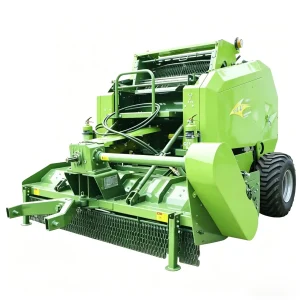
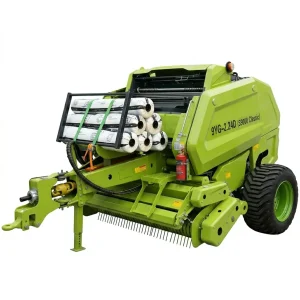
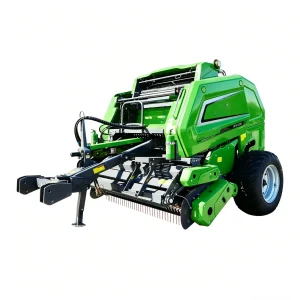
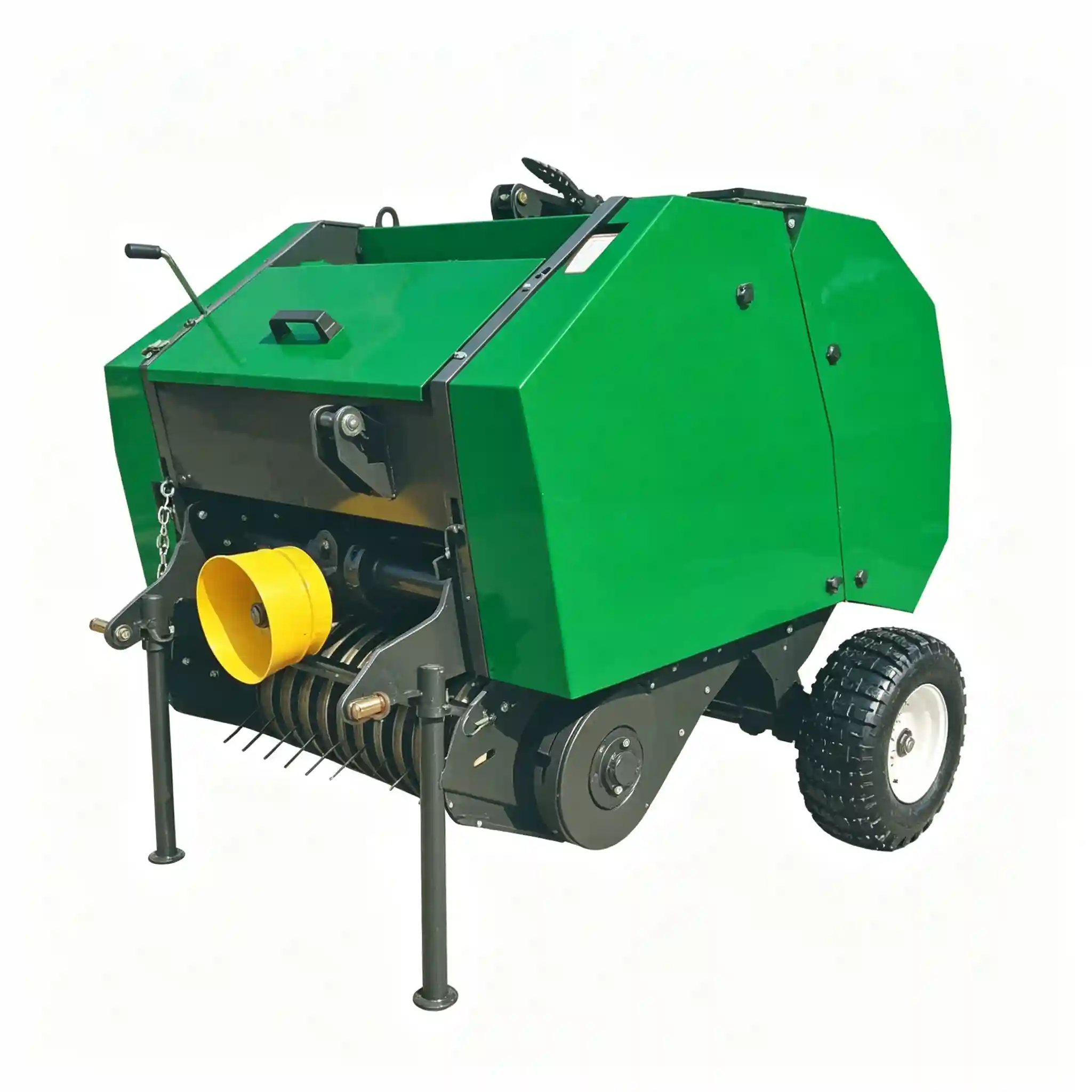
9YK-870 Round Hay Baler — Model Overview
The 9YK-870 Round Hay Baler is a trailed, PTO-driven baling machine engineered for farms and contractors that run 25–50 hp tractors. It picks up windrows at 800 mm width, compresses material through a fixed roll drum chamber, and delivers rope-wrapped bales measuring Φ630 × 700 mm — each weighing approximately 20–30 kg depending on crop type and moisture. At 440 kg total machine weight and an overall footprint of 1300 × 1300 × 1350 mm, it moves between plots without wide-load paperwork and connects to any Cat I drawbar in under ten minutes.
Buyers sourcing a round hay baler for sale in the compact tractor segment will find that the 9YK-870 covers the most common baling scenarios — dry grass, wheat straw, rice straw, corn stalk, alfalfa — without requiring a high-horsepower tractor fleet or specialist operators. The spring-tooth pickup feeds material directly into the compression zone, eliminating a separate auger stage and reducing the number of jam-prone transfer points.
OEM and private-label orders are accepted. Qualified distributors can request branded configurations, custom color schemes, and bulk packaging options. See the FAQ section below for specifics.
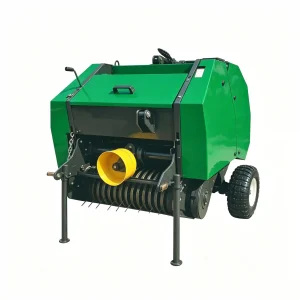
Technical Specifications of the 9YK-870 Mini Round Baler with Rope Wrapping System
All parameters below are taken directly from the manufacturer’s certified specification sheet. Use these figures to verify tractor compatibility, bale handler fitment, and transport clearance before ordering.
| # | Parameter | Unit | Specification |
|---|---|---|---|
| 1 | Model Name | — | 9YK-870 Model 870 Round Baler |
| 2 | Hitching Method | — | Trailed (Cat I Drawbar) |
| 3 | Picking Width | mm | 800 |
| 4 | Picker Structure | — | Spring Tooth Type |
| 5 | Feeder Structure | — | Directly Fed by Spring Tooth (No Auger) |
| 6 | Operating Speed | km/h | 2 – 5 |
| 7 | Bale Chamber Type | — | Roll Drum Type (Fixed Chamber) |
| 8 | Compressing Room Width | mm | 700 |
| 9 | Compression Chamber Diameter | mm | Φ 630 |
| 10 | Bundling / Wrapping Type | — | Rope Wrapping (Automatic) |
| 11 | Bale Size (Diameter × Width) | mm | Φ 630 × 700 |
| 12 | Overall Dimensions (L × W × H) | mm | 1300 × 1300 × 1350 |
| 13 | Tire Size | — | 18 × 6.50-8-4PR |
| 14 | Machine Weight | kg | 440 |
| 15 | Matching Power Range | hp | 25 – 50 |
| 16 | Required PTO Speed | rpm | 540 |
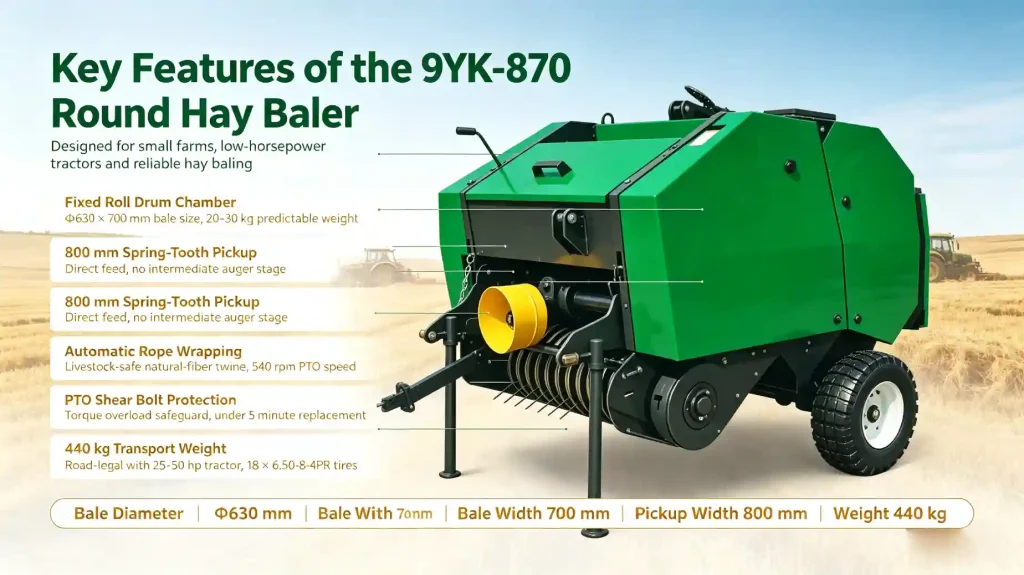
Key Features of the 9YK-870 Round Hay Baler for Small Farm Applications
Fixed Roll Drum Chamber — Same Bale, Every Cycle
The compression zone measures exactly Φ630 mm in diameter and 700 mm wide. Because those dimensions cannot change mid-cycle, every bale that drops is the same shape and volume. Bale weight ranges from 20 kg (dry straw) to 30 kg (dense grass) depending on crop moisture — predictable enough for pallet stacking, bale spike loading, and manual handling without a front loader. Power draw stays flat across the bale cycle, which protects the tractor’s PTO shaft from surge stress, an important consideration on 25 hp machines operating near their rated output.
800 mm Spring-Tooth Pickup with Direct Feed — No Auger Stage
Spring-tooth tines flex over surface irregularities rather than shearing against them, which extends tine service life on uneven ground. Material is lifted and fed straight into the compression chamber without passing through an intermediate auger — a design that removes one crop transfer point and lowers the likelihood of wrapping blockages. The 800 mm pickup width matches standard windrow widths left by common 2.5 m disc mowers after row merging, so field passes stay efficient.
Automatic Rope Wrapping System — Low Input Cost, Livestock-Safe Twine
When the bale reaches target density, an audible buzzer alerts the operator. The rope wrapping sequence then runs automatically at 540 rpm PTO speed, binding the bale before the rear gate opens to release it. Natural-fiber rope is the standard binding material — it biodegrades rapidly if composted and does not cause the internal lacerations that synthetic net or film twine can produce if accidentally ingested by livestock. Rope stock per 200-bale session can be carried in a standard storage box, keeping field resupply simple. This is one reason the mini round baler with rope wrapping system format remains dominant in smallholder markets across Asia, Eastern Europe, and Sub-Saharan Africa.
PTO Shear Bolt Overload Protection
The drive shaft connection includes a shear bolt that severs under torque spikes before damage reaches the baler gearbox or the tractor’s PTO clutch. Replacement shear bolts cost under USD 2 per unit and swap in under five minutes without tools. This protection is particularly valuable for operators running on uneven terrain or baling crop material with variable density, where sudden load spikes are common.
440 kg Machine Weight — Road-Legal Transport Without Permits
At 1350 mm tall and 1300 mm wide, the 9YK-870 moves on public roads behind any compatible 25–50 hp tractor without triggering wide-load requirements in most jurisdictions. The 18 × 6.50-8-4PR tires provide adequate flotation on soft field surfaces while keeping rolling resistance low on compacted tracks. Contractors covering five or more plots per day will recognize the value of not needing a dedicated transport trailer for the baler.
Applications of the 9YK-870 Round Hay Baler
Designed as a round hay baler for small farm applications, the 9YK-870 suits operations where bale weight, machine size, and tractor horsepower need to remain within tight limits. Typical use contexts:
- Livestock feed preparation: Dry grass, alfalfa, and mixed forage baled for cattle, dairy, and sheep operations. Bales at 20–30 kg move by hand or with a standard bale spike — no telehandler required.
- Grain crop residue recovery: Wheat straw and rice straw collected after combine harvesting. The 800 mm pickup width aligns well with combine swath widths common in small-plot grain farming across Asia and Southern Europe.
- Corn stalk baling: Post-harvest corn stalk collection for biomass fuel, mushroom substrate, or animal bedding — growing markets in China, Eastern Europe, and sub-Saharan Africa where field residue management is increasingly regulated.
- Contract baling on fragmented plots: The unit’s 440 kg transport weight means a single tractor can tow it between smallholder plots without additional logistics cost. Operating speed of 2–5 km/h allows 80–100 bale cycles per hour under normal windrow conditions.
- Slope terrain and irregular fields: The trailed configuration and low center of gravity support operation on gentle hillside plots where three-point mounted equipment would restrict safe tractor angles.
- Biomass and green energy feedstock: Straw and grass bales at Φ630 × 700 mm meet the size and density parameters required by most small-scale biomass boiler operators and biofuel collection programs.
How Many Square Bales to a Round Bale?
This is one of the most practical questions buyers ask when switching from square to round baling. The answer depends entirely on the weight of each bale type — there is no universal number, but the calculation is simple:
Formula: Number of square bales = Round bale weight ÷ Square bale weight
- 9YK-870 round bale (dry wheat straw, typical): 20–25 kg → equivalent to 4–5 standard square bales at 5 kg each, or 1–2 medium square bales at 18–20 kg each.
- 9YK-870 round bale (denser field grass): 28–30 kg → equivalent to 5–6 standard square bales at 5 kg each.
- For comparison: larger commercial round balers producing 400–800 kg bales equal 10–20 small square bales (at 40–60 lb / 18–27 kg each), based on data from University of Minnesota extension research.
The 9YK-870 produces bales in the 20–30 kg range specifically because that weight bracket is manageable by one or two people without mechanical lifting equipment. This is the defining advantage of a compact round hay baler versus full-size commercial baling equipment in smallholder markets: individual bales stay within manual handling limits, cutting labor cost at the feeding end of the operation.
Storage density is another factor: round bales stack less tightly than rectangular bales, so a barn holding 200 square bales will store a different volume of round bales. Factor in roughly 20–25% lower volumetric storage efficiency for round versus square when planning storage capacity for the 9YK-870’s output.
Frequently Asked Questions — 9YK-870 Round Hay Baler
Q1: Which tractors are compatible?
Any tractor rated 25–50 hp with a 540 rpm PTO output and Cat I drawbar hitch. This covers the majority of compact and sub-compact utility tractors sold in Asia, Latin America, Eastern Europe, and smallholder markets in Africa and Oceania. Confirm PTO shaft spline count (6-spline standard) and hitch pin diameter before finalizing the order.
Q2: What crops can the 9YK-870 handle?
Designed for dry and semi-dry fibrous crops: wheat straw, rice straw, dry grass, alfalfa, corn stalk, mixed forage, and similar materials. Not intended for high-moisture silage (above ~50% moisture), which requires sealed wrapping with film to maintain anaerobic fermentation. A separate bale wrapper would be needed for silage applications.
Q3: Is the 9YK-870 available for OEM / private-label supply?
Yes. As a compact round hay baler manufacturer for OEM supply, we accept branded orders with custom color specifications, logo placement, and packaging requirements. Minimum order quantities and lead times vary by configuration — contact us with your target market, annual volume estimate, and any mandatory safety certifications (CE, ISO, or local equivalents) for a formal quotation.
Q4: What spare parts should be stocked for the first season?
Priority items: PTO shear bolts (primary wear item — replace after any overload event), a full set of spring-tooth pickup tines, baling rope sufficient for at least 200 cycles, and drive sprocket pins. These cover the vast majority of in-field maintenance needs and can be sourced directly from the manufacturer or through local distributors in most markets.
Q5: What is the estimated output per hour?
Under typical field conditions — dry straw windrows, flat terrain, experienced operator — the 9YK-870 completes approximately 80–100 bale cycles per hour at an operating speed of 2–5 km/h. Output drops on steep ground, in high-moisture crops, or with very dense windrows that require slower travel to avoid pickup blockages.
Inquire About the 9YK-870
Get a Wholesale or OEM Quote for the 9YK-870 Round Hay Baler
Tell us your tractor horsepower, target crop type, annual baling volume, and destination country. We will confirm compatibility, certifications, lead time, and FOB pricing within one business day. OEM and branded configurations available.
All specifications are for reference only. Final parameters are subject to manufacturer confirmation. Data sourced from the certified 9YK-870 product specification sheet.