
★ PILLAR GUIDE · UPDATED 2026
The Complete Guide to Hay Balers in 2026: Types, Costs & How to Choose
Everything professional farmers, agricultural distributors and ranch operators need to know — round vs square, prices, brands, sizing, and how to pick the right hay baler for your operation.
Choosing the right hay baler is one of the most consequential equipment decisions any forage operation will make. The wrong choice can mean tens of thousands of dollars in lost productivity, wasted hay, and frustrated operators. The right one will pay for itself in 2-5 seasons and quietly run for 15+ years.
This 2026 guide condenses the practical experience of manufacturing 4,000+ hay balers annually and shipping to 40+ countries into a single, no-fluff resource. Whether you’re sourcing for a 50-acre family farm or evaluating bulk procurement for a national distribution network, you’ll find the data and frameworks here to make a confident decision.
📖 WHAT YOU’LL LEARN
- The 4 main types of hay balers and which fits your operation
- 2026 hay baler price ranges (new, used, and OEM)
- A 12-factor selection framework engineers actually use
- Tractor horsepower matching by baler class
- How to evaluate manufacturers and avoid expensive mistakes
What Is a Hay Baler?
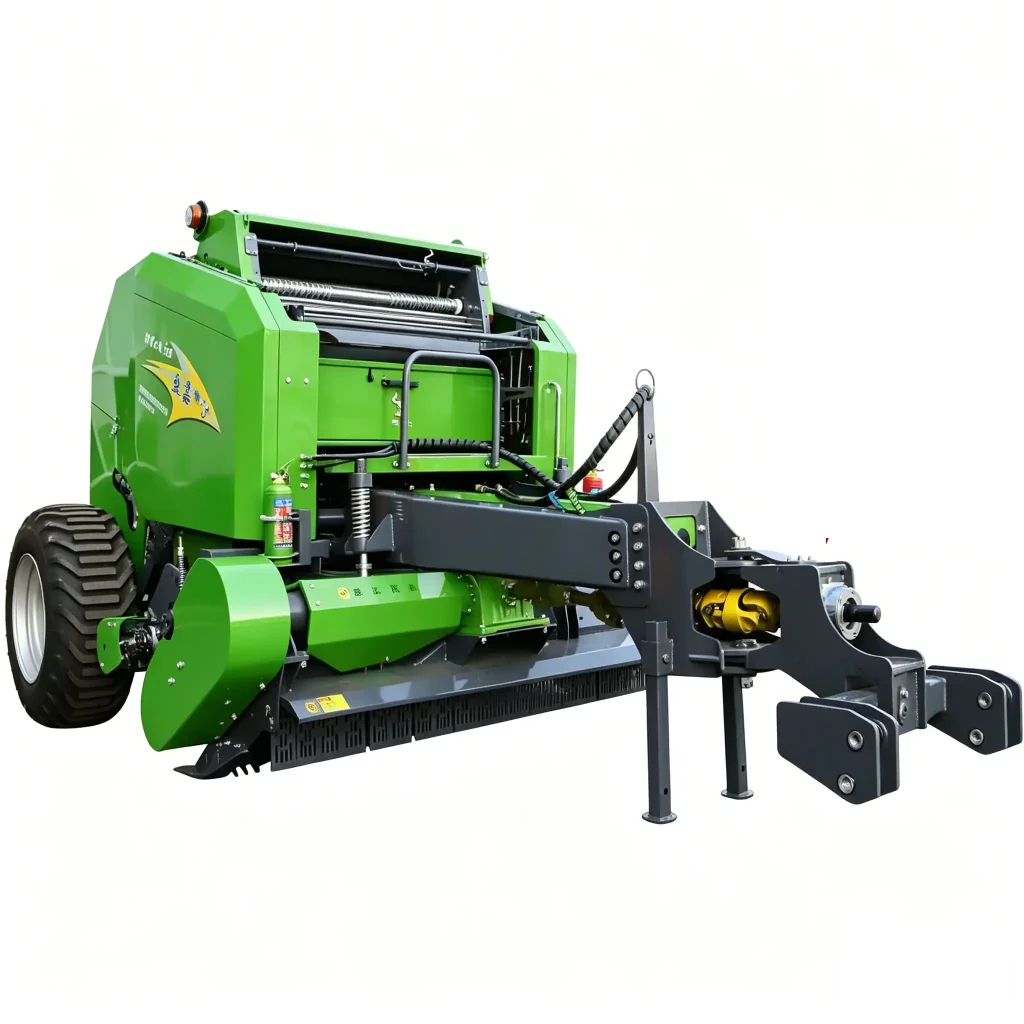
A hay baler is a piece of agricultural machinery that gathers cut, dried hay (or straw, silage, alfalfa, and other forages) from windrows and compresses it into compact, transportable bales. The bale is then bound with twine, net wrap, or plastic film, and ejected for collection.
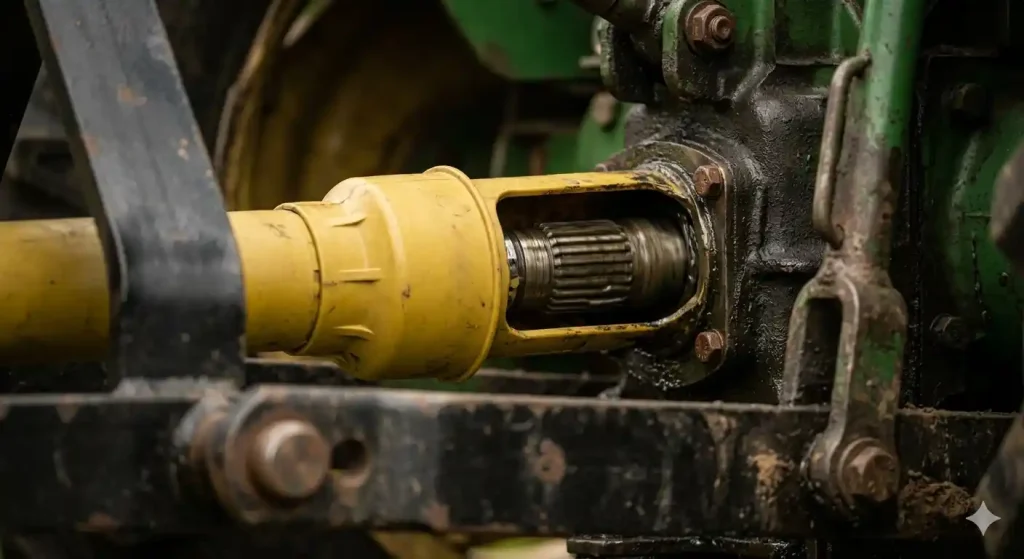
Modern hay balers are pulled behind a tractor and powered by its PTO (Power Take-Off) shaft, though self-propelled models also exist for very large operations. The compressed bale form factor is what makes hay storage, transport and feeding economically viable at scale — the same volume of loose hay would require 4-8x more storage space and dramatically more labor to handle.
In a complete hay-making system, the baler is one stage in a sequence: cutting (mower) → drying / tedding → raking into windrows → baling → collection / transport → storage. Getting the baler right is critical because it determines bale shape, density, weight, weather resistance, and ultimately the dollar value of your hay.
The 4 Main Types of Hay Balers
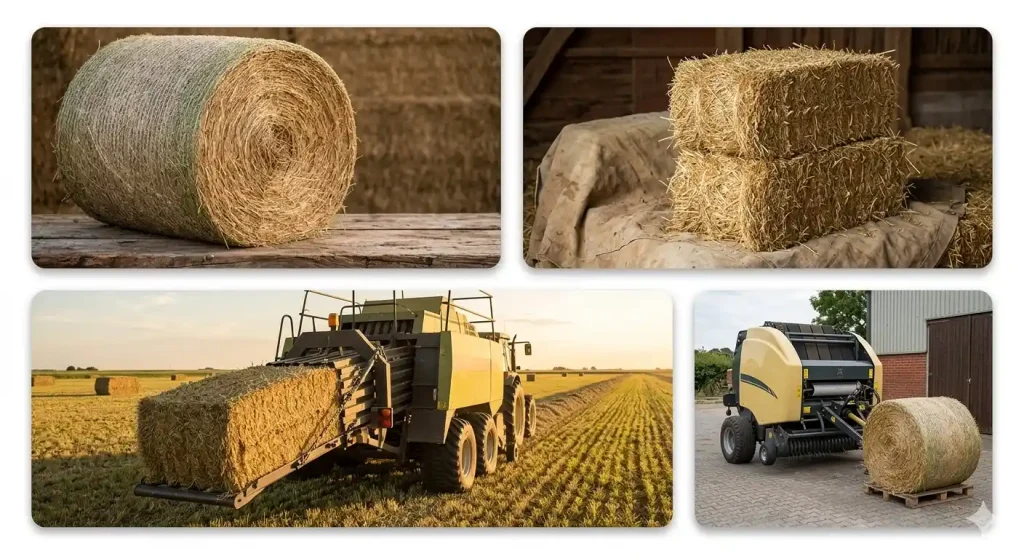
Hay balers fall into four categories defined by the bale shape and size they produce. Each suits different operation scales, terrain, storage realities, and end markets.
MOST COMMON
1. Round Hay Balers
Produce cylindrical bales typically 4×4 ft, 4×5 ft, 5×5 ft, or 5×6 ft, weighing 700-1,800 lbs. They dominate the global market because they shed water exceptionally well, can be stored outdoors, require less horsepower than equivalent-volume square balers, and have fewer moving parts.
Best for: Mid-to-large livestock operations, beef cattle, contract harvesters, anywhere with limited indoor storage.
2. Small Square Balers
Produce rectangular bales typically 14×18 inches and 30-50 inches long, weighing 40-75 lbs. Easy to handle by hand, stack in barns, and sell to the horse and small-livestock market where premium pricing is available.
Best for: Horse farms, hobby operations, premium hay sellers, indoor storage situations.
3. Large Square Balers
Produce dense rectangular bales as large as 4×4×8 ft, weighing up to 2,200 lbs. Maximum density and stackability for transport — favored for export, feedlots, and biomass operations where every cubic foot in a shipping container counts.
Best for: Large-scale commercial operations, hay export, feedlots, biomass-energy supply.
4. Mini Round Balers
Produce small round bales typically 20×28 inches, weighing 40-65 lbs. They run on tractors as small as 15-20 PTO horsepower, making them the only baler option for most subcompact tractors. Increasingly popular for homesteads, small horse operations, and pine-straw production.
Best for: Subcompact tractors, small farms under 20 acres, specialty crops like pine straw.
📚 Read next: For a head-to-head comparison of round vs square balers including cost-per-bale economics, see our dedicated Round vs Square Hay Balers guide.
2026 Hay Baler Price Ranges
Pricing varies enormously by class, brand, age and configuration. Below are realistic 2026 market price bands for new equipment from established manufacturers, plus typical used-market discounts.
| Baler Type | New (USD) | Used 5-yr (USD) | OEM Direct (USD) |
|---|---|---|---|
| Mini Round Baler | $5,000 – $9,000 | $3,500 – $6,000 | $2,800 – $5,500 |
| Small Square Baler | $22,000 – $40,000 | $10,000 – $22,000 | $15,000 – $28,000 |
| Round Baler (4×5) | $30,000 – $55,000 | $15,000 – $32,000 | $18,000 – $35,000 |
| Round Baler (5×6) | $48,000 – $85,000 | $25,000 – $50,000 | $30,000 – $58,000 |
| Large Square Baler | $120,000 – $250,000+ | $60,000 – $140,000 | $80,000 – $180,000 |
Note: OEM-direct pricing reflects factory-direct purchases of comparable specifications without dealer margin. Premium-brand new equipment can exceed these ranges by 20-40%.
A useful rule of thumb: a well-maintained hay baler should produce 50,000+ bales over its service life. At a $40,000 purchase price, that works out to approximately $0.80 per bale in amortized capital cost — making the math work even for relatively small operations baling 500-1,000 bales per season.
Tractor Horsepower Requirements by Baler Type
Matching tractor PTO horsepower to baler requirements is non-negotiable. Underpowered setups produce inconsistent bales, overload the tractor’s drivetrain, and create real safety hazards on slopes. Overpowered setups simply waste fuel.
| Baler Class | Minimum PTO HP | Recommended PTO HP | Tractor Weight (lbs) |
|---|---|---|---|
| Mini Round Baler | 15 HP | 20-25 HP | 2,000+ |
| Compact Square Baler | 16-20 HP | 25-35 HP | 2,300+ |
| Standard Square Baler | 35 HP | 45-65 HP | 3,500+ |
| Round Baler (4×4 / 4×5) | 40 HP | 55-75 HP | 5,000+ |
| Round Baler (5×5 / 5×6) | 75 HP | 90-120 HP | 8,000+ |
| Large Square Baler | 130 HP | 180-260 HP | 14,000+ |
A practical caution: “Minimum PTO HP” assumes flat ground, light windrows, and dry hay. The moment you encounter slopes, heavy windrows, baleage (wet forage), or sustained operation, that minimum becomes inadequate. Plan for the recommended figure, not the minimum.
Tractor weight matters as much as horsepower. A 60 HP tractor on undersized tires will not safely stop a full 5×6 round baler on even a modest downhill. We strongly recommend front weights or loaded rear tires for any tractor pulling a round baler heavier than 60% of the tractor’s own weight.
12 Factors to Consider Before Buying a Hay Baler
After 100+ engineering reviews and 4,000+ machines shipped annually, we’ve distilled the buyer’s evaluation down to twelve factors. Walk through each one before you commit.
1. Operation scale. How many acres of hay or straw will you bale per season? Under 20 acres → mini round or compact square. 20-150 acres → mid-size round. 150+ acres → full-size round or large square.
2. Tractor specification. PTO horsepower, weight, hitch type, hydraulic outlets — your tractor sets the upper bound on what baler you can safely operate. Don’t buy “to grow into.”
3. Crop type. Dry hay, baleage, straw, alfalfa, cornstalks, and pine straw each impose different demands on the baler. Baleage especially requires heavy-duty silage-rated balers — a standard hay baler will not survive sustained baleage use.
4. Bale size requirements. What does your customer or your livestock need? Horse buyers want small squares. Beef operations prefer 5×6 rounds. Export markets demand large squares. Don’t optimize for what’s convenient to make — optimize for what sells.
5. Storage and handling. If you don’t have indoor storage, square bales are a non-starter. If you can’t handle 1,500-lb bales mechanically, full-size rounds are off the table. Match the baler to the storage and handling reality.
6. Terrain. Steep or hilly ground rules out the heaviest balers — the safety margin disappears. Round balers on slopes can also get away from you on ejection. Flat ground gives you maximum flexibility.
7. Net wrap vs twine. Net wrap is faster (1-2 wraps vs 20+ revolutions for twine), produces tighter bales, and sheds water better. Twine is cheaper per bale (~$0.10 vs $0.25) and simpler mechanically. For commercial operations, net wrap is now the norm.
8. Variable vs fixed chamber (round balers only). Variable chamber balers produce bales of any size from start; fixed chamber balers always make the same size. Variable is more versatile; fixed is mechanically simpler and cheaper.
9. Pre-cutter / crop chopper. An optional knife system that chops hay into 4-inch lengths during baling. Reduces feeding loss for livestock by up to 15%, increases bale density 5-10%. Worth the upgrade if you feed your own bales.
10. Manufacturer reputation and parts availability. A baler is a 15-20 year asset. Confirm parts will still be available in year 10. This favors established manufacturers with active dealer networks and is the single most overlooked criterion.
11. Warranty and after-sales support. Standard warranty in the industry is 12 months on parts. We provide 24 months on every machine. Confirm what’s covered, what isn’t, and whether technical support is included for the warranty period.
12. Total cost of ownership (TCO). Don’t optimize for sticker price. Add: net wrap or twine ($1,500-$3,000/yr), maintenance and parts (5-8% of purchase price annually), fuel, and depreciation. The cheapest baler at purchase is rarely the cheapest baler at year 5.
How to Evaluate Hay Baler Manufacturers
Equipment is half the equation; the manufacturer behind it is the other half. A short checklist for evaluating any supplier:
- Manufacturing transparency — Will they let you visit the factory or provide a live video tour? Reluctance is a red flag.
- Quality certifications — At minimum, ISO 9001 quality management. CE certification for European markets. Independent QC testing capability in-house.
- Patent portfolio — Indicates active R&D investment, not just rebadging others’ designs. Ask for patent counts and certificates.
- Annual production capacity — A factory producing 100 units a year carries different supply risk than one producing 4,000.
- Export experience — Self-operated import/export rights, multiple country shipping records, and documented compliance experience matter for international buyers.
- Customer references — Real customers in similar markets to yours. Ask. Manufacturers with nothing to hide will provide them.
⭐ ABOUT CANADA HAY-BALERS
A National High-Tech Enterprise You Can Verify
Canada Hay-Balers Co., Ltd operates a 32,000㎡ smart factory with 100+ patents, ISO 9001 certification, AAA Credit Enterprise rating, and dedicated round-baler and mower production lines each capable of 2,000 sets annually. We export to 40+ countries and welcome factory visits — virtual or in person.
Common Mistakes Hay Baler Buyers Make
Over the years, we’ve seen the same costly mistakes repeat across markets. The most common:
- Buying based on bale size convenience rather than market demand. If your local hay buyers want small squares, a round baler is the wrong asset regardless of how efficient it is.
- Underestimating tractor weight requirements. Horsepower gets all the attention; tractor weight is what stops a full baler on a hill.
- Skipping the pre-season inspection. A 30-minute inspection at the start of the season prevents most field breakdowns. Skipping it costs days of lost productivity.
- Buying the cheapest net wrap. Cheap net wrap fails in the bale chamber, wraps around rollers, and tears during ejection. Quality net wrap costs 10-15% more and saves hours of downtime.
- Neglecting parts availability before buying. Confirm 5-year and 10-year parts availability with the manufacturer in writing before you sign.
- Ignoring training. A skilled baler operator produces 30-50% more bales per hour than an untrained one, with better consistency. Invest in training.
Frequently Asked Questions
How long does a well-maintained hay baler last?
Quality balers run 15-20 years and produce 50,000-100,000 bales over their service life. Maintenance discipline is the single biggest factor in longevity — neglected balers fail at 5-7 years.
Can I bale wet hay or baleage with a standard hay baler?
Standard hay balers are not built for sustained baleage use. Baleage bales weigh 3-4× as much as dry hay bales of the same size. Use a heavy-duty silage-rated baler for baleage.
What’s the difference between OEM and branded hay balers?
OEM (Original Equipment Manufacturer) means the actual factory that makes the machine. Branded balers from major equipment companies are often manufactured by OEM partners. Buying OEM-direct can reduce costs 20-40% versus branded equivalent at the same quality.
Should I buy a new or used hay baler?
If you bale fewer than 1,000 bales annually and have mechanical aptitude, a 5-7 year old used baler from a reputable owner can be excellent value. Above that volume, the productivity, warranty, and reliability of a new baler typically justify the price gap within 3 seasons.
How long is shipping if I import directly from the manufacturer?
From a Canadian or Asian manufacturer to most international destinations, expect 30-45 days door-to-door under FOB or CIF terms. Pre-production lead time adds 15-30 days for custom or bulk orders.
Next Steps
If you’re at the start of your hay baler buying journey, the most useful immediate actions are:
- Confirm your tractor’s PTO horsepower and weight (don’t guess — check the spec sheet).
- Decide bale type based on your end market, not your equipment preference.
- Get quotes from at least 3 manufacturers, including one OEM-direct.
- Confirm parts availability and warranty terms in writing.
- If possible, see the baler operate in conditions similar to yours.
Have questions about your specific operation?
Our engineers respond within 12 business hours with a tailored quote, specifications, and shipping plan.
About this guide: Compiled by the engineering team at Canada Hay-Balers Co., Ltd, manufacturer of round and square hay balers, mowers, rakes, and forage equipment exported to 40+ countries. ISO 9001 certified, 100+ technical patents, 32,000㎡ smart factory.
Last updated: 2026 edition. We refresh this guide annually with current pricing, new specifications, and emerging market data.